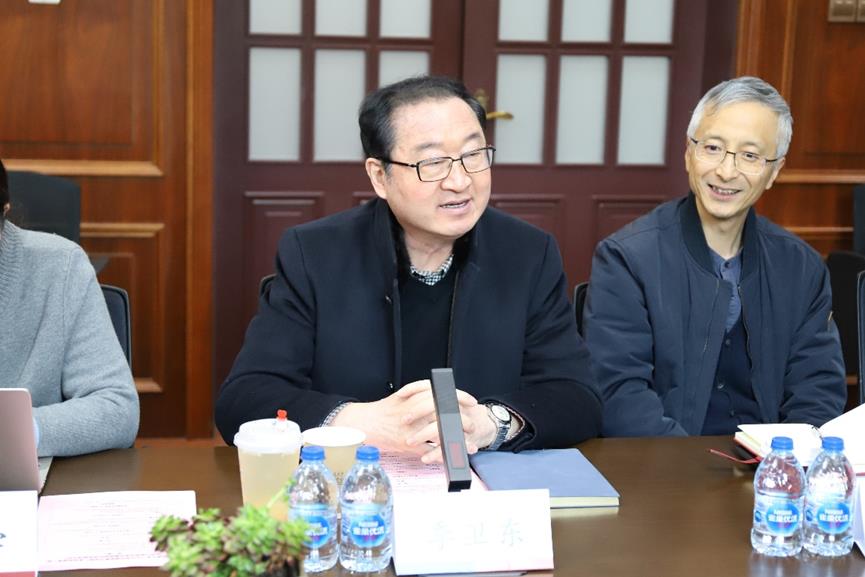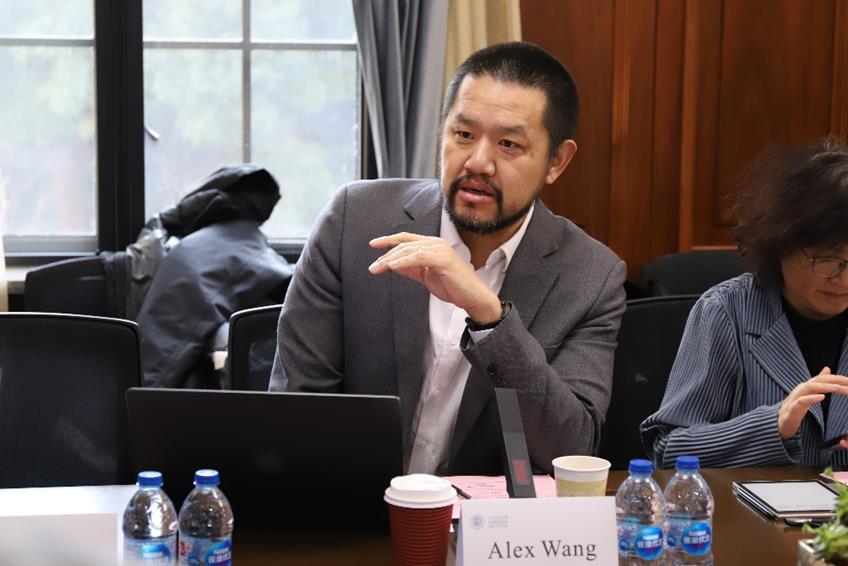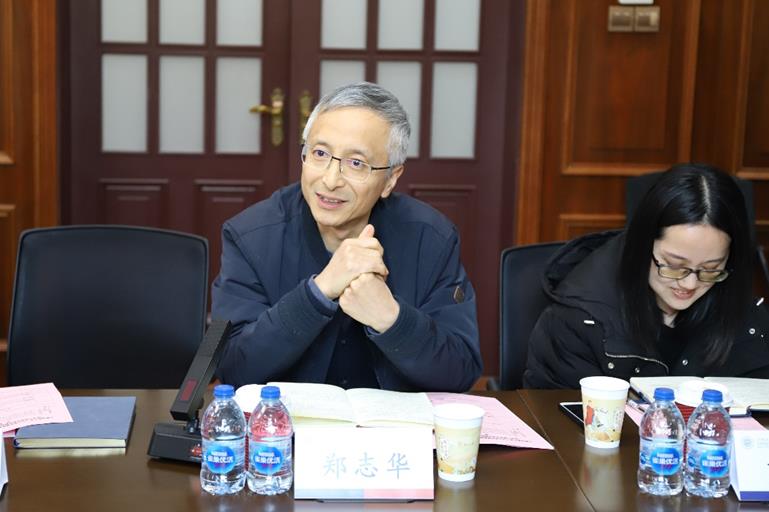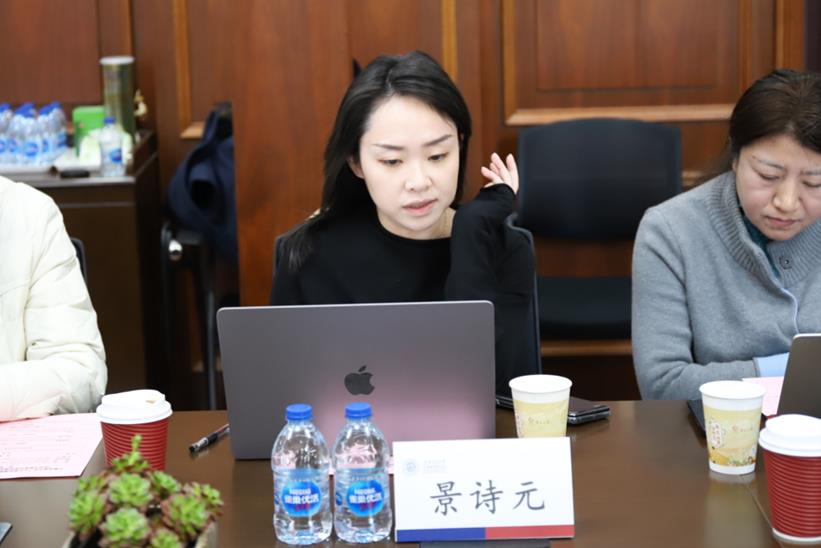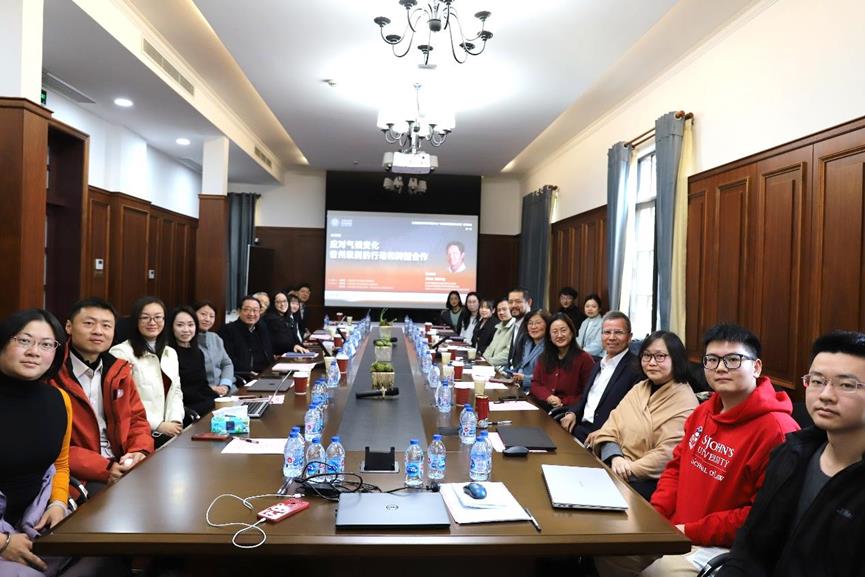
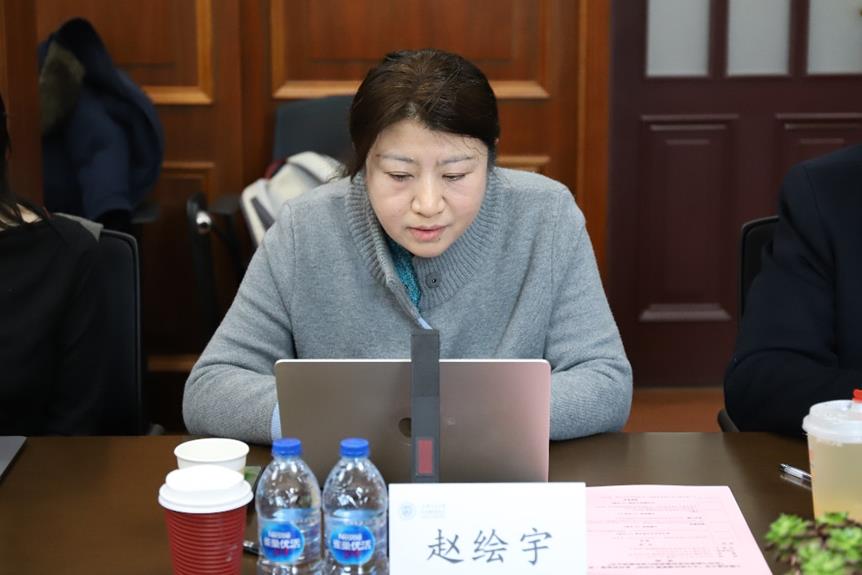
On the morning of January 8, the first lecture of the "China-Japan-U.S. Environmental Policies and Laws" lecture series, hosted by the Center for Japanese Studies of Shanghai Jiao Tong University, was successfully held at the Xuhui campus of the university. The lecture was delivered by Professor Alex Wang, a law professor at the University of California, Los Angeles (UCLA), co-director of the Emmett Institute on Climate Change and the Environment, and the Walter and Shirley Wang Chair in U.S.-China Relations and Communication. The theme of the lecture was "Subnational Actions on Climate Change and Transnational Cooperation". The lecture was moderated by Associate Professor Zhao Huiyu from the KoGuan Law School of Shanghai Jiao Tong University. Professor Ji Weidong, University Professor of Humanity and Social Sciences and Director of the Center for Japanese Studies, delivered the opening remarks. Associate Professor Zhao Huiyu, Associate Research Fellow Zheng Zhihua from the center, and Dr. Jing Shiyuan, Postdoctoral Researcher at the China Institute for Socio-Legal Studies, also participated in the discussion. The lecture was attended by many experts, scholars, and faculty and students from the university.
Professor Zhao Huiyu welcomed Professor Alex Wang and briefly introduced the attendees.
Professor Ji Weidong, on behalf of the Center for Japanese Studies
and the China Institute for Socio-Legal Studies at Shanghai Jiao Tong
University, extended a warm welcome to Professor Alex Wang and briefly
introduced the background of the "China-Japan-U.S. Environmental Policies
and Laws" lecture series, emphasizing the urgency and importance of
environmental issues today.
Professor Alex Wang delivered a lecture on "Subnational Actions
on Climate Change and Transnational Cooperation." He began by discussing
the potential negative impacts of the Trump administration on environmental
protection. He analyzed the legal basis, positions, and implications behind the
case of Ohio v. U.S. Environmental Protection Agency (EPA) and
introduced California's current challenges in combating climate change and
future development trends. He pointed out that the case involves a challenge to
the EPA's decision to restore California's waiver to set stricter automobile
emission standards under the Clean Air Act. Supporters of the EPA's
intervention include several states and cities, numerous environmental
organizations, and automobile manufacturers. They argue that California's
strict emission standards are crucial for addressing climate change and
protecting the environment. Automobile manufacturers even reached an
independent agreement with California, promising to continue reducing emissions
and meet California's LEV (Low Emission Vehicle) and ZEV (Zero Emission
Vehicle) standards. During the litigation, the court conducted an in-depth
analysis of the arguments presented. Ultimately, the U.S. Court of Appeals for
the District of Columbia Circuit ruled that the fuel plaintiffs lacked standing
to sue and rejected the state plaintiffs' constitutional claims. The judgment
highlights the complex legal relationship between the Clean Air Act and
California's waiver. The Clean Air Act grants states considerable discretion in
achieving federal air quality goals, but new car emission standards are typically
set at the federal level by the EPA. Section 209(b) of the Act offers
California a special waiver, allowing it to set its own automobile emission
standards under certain conditions, due to its historical air pollution
problems and pioneering efforts in vehicle emission standards. California's
litigation on vehicle emissions is not only a legal battle but also a profound
political struggle involving environmental protection, economic development,
and the distribution of power among states. These cases demonstrate the
conflicts and cooperation between various stakeholders when addressing the
global challenge of climate change.
Zhao Huiyu discussed the active judicial activities between the
federal and local governments in the United States and then introduced
California's environmental legislation and judicial achievements, which are of
great reference value to other countries and regions. She believes that, in the
foreseeable future, Shanghai is highly likely to be impacted by climate change,
and given the growing local cooperation between China and the U.S.,
California's experience is highly relevant for future pilot projects in China.
Zheng Zhihua, combining insights from Professor Alex Wang’s lecture,
noted that the two most important elements in environmental protection and
climate change response globally, especially in the U.S., are willingness and
capability. The willingness hierarchy determines the degree of active
participation of countries and regions in addressing climate change, while the
capability hierarchy determines their contributions and methods. Different
regions have different advantages and capacities for participation.
Additionally, he pointed out that the U.S. courts being at the center of the
climate debate is very different from the situation in China. In the future,
both countries can complement each other’s strengths to better protect the
environment and address climate change.
Jing Shiyuan, referencing Professor Alex Wang's earlier articles,
discussed the necessary conditions for local governments to become "committed
climate leaders". Shanghai has made efforts in recent years to contribute
its practices and wisdom to both the top-down and bottom-up dimensions of
climate governance, and has achieved certain results. Given the similarities
and shared challenges between California and Shanghai in climate governance,
both regions can learn from each other's developments in this regard.
Professor Ji Weidong delivered a concluding speech, summarizing the
lecture. He expressed that this lecture was an academic feast. Professor Alex
Wang deeply analyzed environmental policies, intergovernmental relations, and
related issues surrounding climate change, using strategic litigation as the
thread. He summarized the lecture into four key areas: the role of government
and corporate strategic litigation, environmental standards, environmental
rights bundles, and the relationship between technology and policy positions. Professor
Ji expressed hope for further collaboration between California and Shanghai on
climate change in the future. He concluded by thanking the keynote speaker,
discussants, and the audience for their insightful contributions and active
participation.