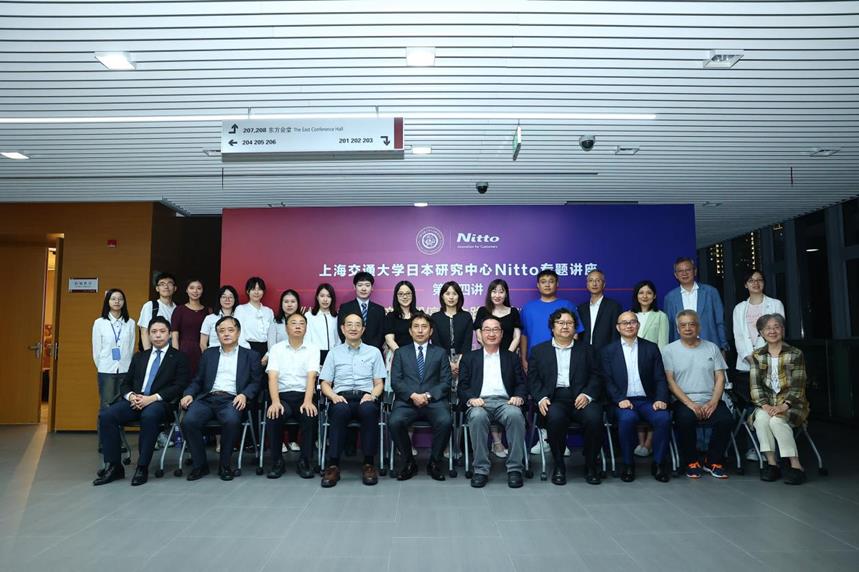
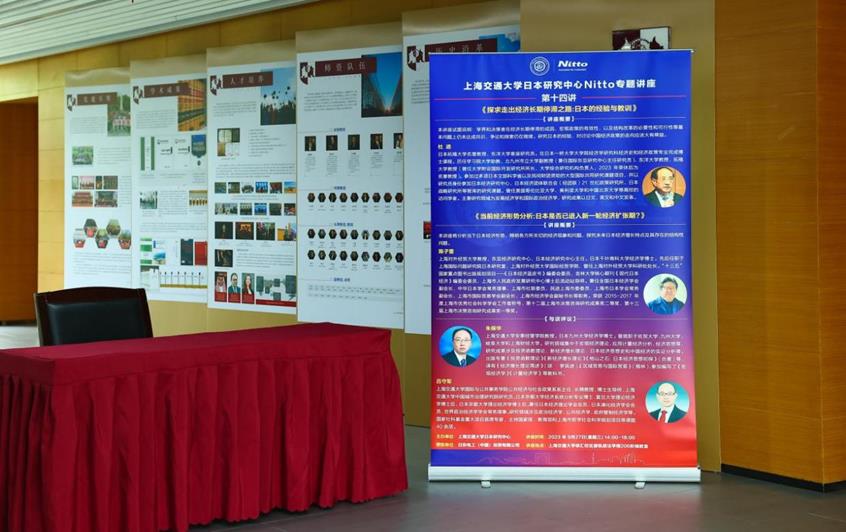
On the afternoon of September 27, 2023, the 14thlecture of the Nitto Special Lecture of the Center for Japanese Studies was successfully held at the Xuhui Campus. This lecture is hosted by the Center for Japanese Studies of Shanghai Jiao Tong University and sponsored by Nitto Denko (China) Investment Co., Ltd. The topics of the lectures were "Exploring the Path Out of Long-Term Economic Stagnation: Japan's Experience and Lessons" and "Analysis of the Current Economic Situation: Has Japan Entering a New Economic Expansion?" Du Jin, emeritus professor of Takushoku University and visiting fellow of Toyo University, and Chen Zilei, director of the East Asian Economic Research Center of Shanghai University of International Business and Economics, served as keynote speakers. Professor Zhu Baohua of Antai School of Economics and Management and Lu Shoujun, Dean of the Department of Public Economics and Social Policy, School of International and Public Affairs, Shanghai Jiao Tong University, co-commentators. Ji Weidong, University Professor of Humanity and Social Sciences and Director of the Center for Japanese Studies of Shanghai Jiao Tong University, presided over the opening ceremony of the lecture, Katsuyoshi Jo, Chairman and President of Nitto Denko (China) Investment Co., Ltd., attended the lecture and delivered a welcome speech, and Zheng Zhihua, associate research professor of the Center for Japanese Studies of Shanghai Jiao Tong University, presided over the discussion. Dozens of Chinese and Japanese scholars, experts, entrepreneurs and practitioners from Shanghai Japan Research and Exchange Center, Shanghai Normal University, Shanghai University of Engineering Science, Ningbo University, Bohong Research, Shanghai Agricultural Sciences, Lawson (China) Investment, Sanyou Sumitsui, CBN, Fosun Prudential, Guojin Securities, Longan Law Firm, Japan Women's University and other institutes attended the lecture.
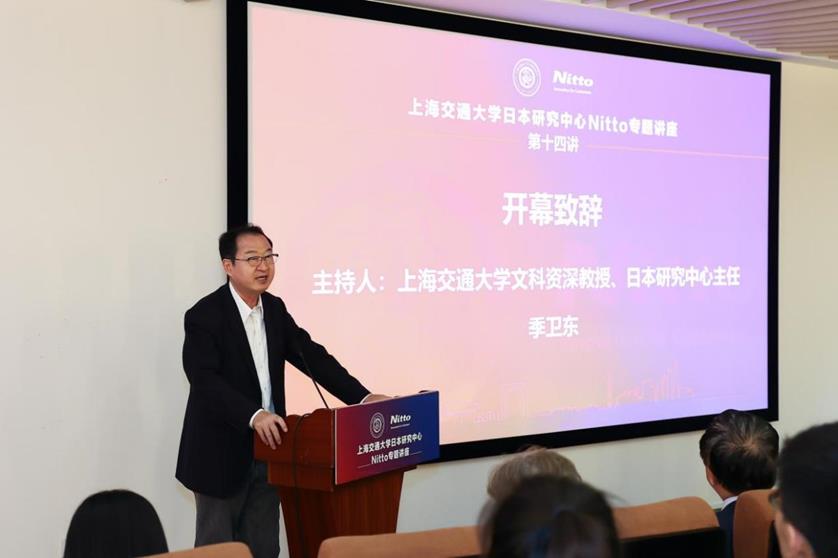
In the opening ceremony, Professor Ji Weidong first introduced the keynote speakers of this session, Professor Du Jin and Professor Chen Zilei, as well as the commentators Professor Zhu Baohua and Professor Lu Shoujun. Ji Weidong said that everyone gathered together today to discuss relevant topics in the field of Japanese economy, and also hoped to help the thinking of China's economic development. Finally, he welcomed the arrival of Professor Du Jin and Professor Chen Zilei, and thanked all the guests for their attendance and participation.
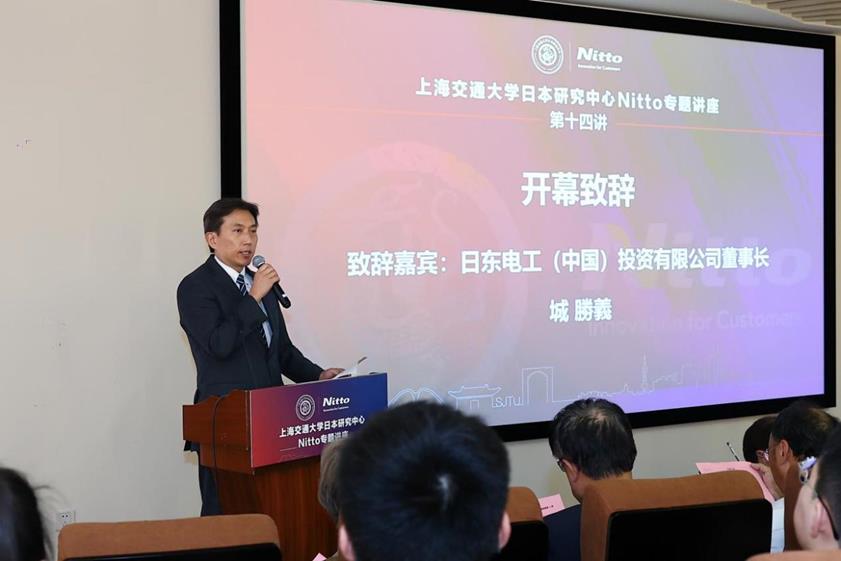
Chairman Katsuyoshi Jo delivered a speech on behalf of the sponsors of the seminar, saying that it was the golden autumn semester, and the campus of Jiao Tong University welcomed a group of new talents full of hope, passion and vitality. He expressed great honor in welcoming the inaugural lecture of the Nitto Symposium in the latter half of 2023 during such a stunning season of momentum and vitality. He sincerely thanked all the personnel at the Centre for their diligent efforts in organizing the Nitto lecture. Over the past few years, China's economic growth has decelerated and entered a phase of optimizing its industrial structure, following measures such as epidemic prevention and control, as well as other impacts from the intricate international environment. Despite the challenges faced by the economy, there has been a strong growth in advanced manufacturing companies, including the electric vehicle industry. This indicates that the underlying prospects for China's long-term economic progress remain unaffected. As positive factors for development continue to increase, the economy is expected to recover further. Therefore, he was eagerly anticipating the insightful analysis from Professors Du Jin and Chen Zilei on the economic stagnation in Japan's past, as well as their examination of Japan's current economic situation. Additionally, he looked forward to the discussion and comments from Professors Zhu Baohua and Lu Shoujun of Shanghai Jiao Tong University, as this will enable a deeper understanding of the global and Chinese economic situation during this unprecedented period of change, providing valuable reference and enlightenment. Finally, he wished the lecture every success and extended his best wishes to everyone for a happy Mid-Autumn Festival and upcoming National Day celebrations.
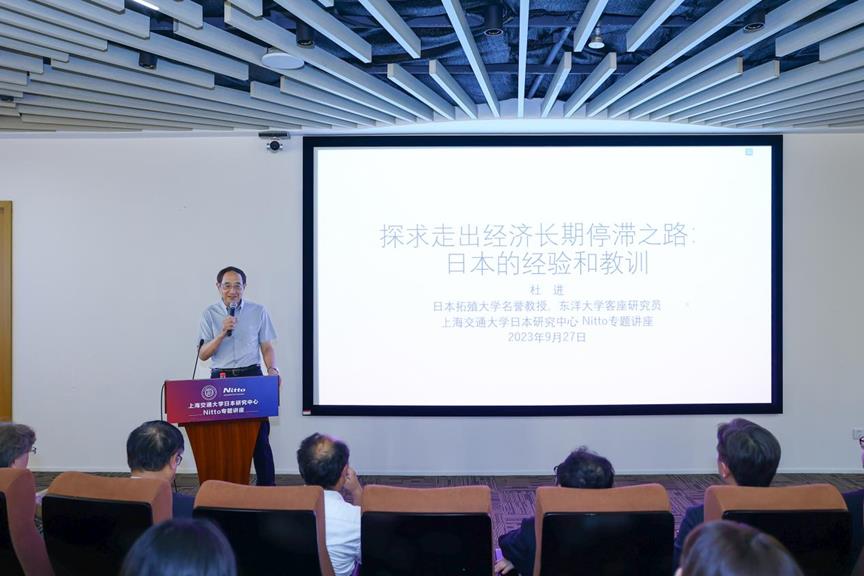
In the keynote speech, Professor Du Jin first expressed his great honor to discuss the economic development situation of Japan with the guests, and he analyzed and explained the purpose of Japan's long-term economic stagnation, the structural analysis of Japan's long-term economic stagnation, and the policy orientation of each major period with the theme of "Exploring the Road Out of Long-term Economic Stagnation: Japan's Experience and Lessons". He believes that, first, studying the historical experience of Japan, a "country with advanced subject matter," can provide reference when thinking about China's economic policy, and will also help us understand the orientation of Japan's foreign economic policy. At the same time, it should be noted that there is no universal economic theory that can guide all policy practices, but that the structural analysis of Japan's long-term economic stagnation should be based on the principle of critical thinking combined with fact-based policy research. Second, we analyze the causal relationship between major macroeconomic indicators and their indicators, and analyze the structural analysis of Japan's long-term economic stagnation by combining the effects of the Kishida administration's "ultra-loose monetary policy" and fiscal policy, as well as the trend of changes in indicators such as labor growth rate and total factor productivity by analyzing the growth accounting of the Japanese economy. Third, it distinguishes the policy orientations of each major period in Japan. Including the serious consequences of the first lost 10 years; The second lost 10-year Koizumi-Takenaka reforms led to the longest period of economic expansion in postwar Japan; The third lost 10 years Abe mainly adopted a reflation strategy during his second administration. He believes that the "new capitalism" advocated by Prime Minister Fumio Kishida since then advocates a break away from neoliberalism and believes that attention should be paid to the issue of distribution. Other scholars have reflected on the neoliberal economy, arguing that past efforts to create a favorable environment for businesses have not produced the desired results, but have devitalized the Japanese economy. Finally, Professor Du Jin summarized the long-term stagnation and structural characteristics of the Japanese economy in the past, commented on the policy orientation and reform effect in different periods, and said that he looked forward to in-depth discussions with the guests in the future.
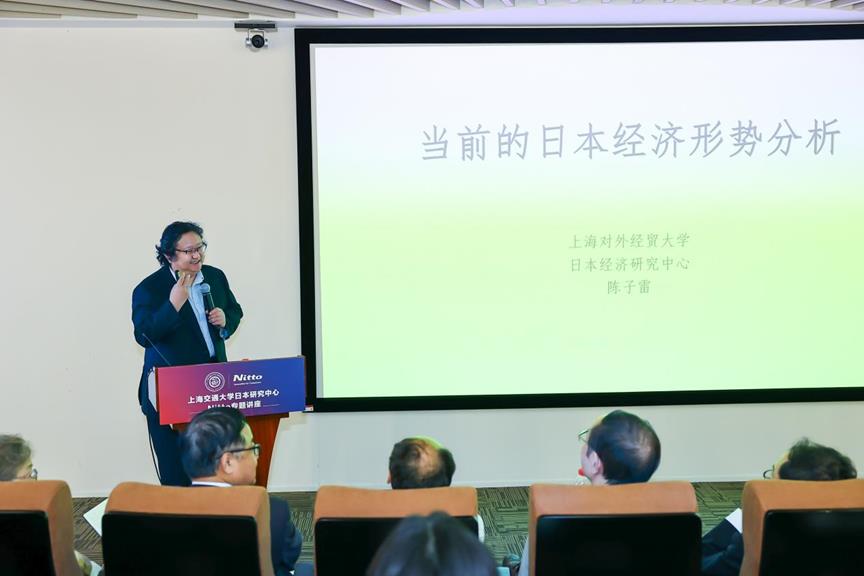
Professor Chen Zilei first thanked Nitto for providing a good platform for this exchange activity and thanked the Center for Japanese Studies of Shanghai Jiao Tong University for its support and help in his research. He presented himself with "Analysis of the Current Economic Situation: Has Japan Entered a New Round of Economic Expansion?" This paper analyzes seven important issues, including the characteristics of inflation in the current Japanese economy, the background of rising profits and revenues of Japanese companies, the main drivers of overseas capital inflows, the attitude of the Bank of Japan towards the implementation of the "exit strategy", the solution to the weak growth of personal consumption in Japan, the sustainability of the growth trend of capital investment by Japanese companies, and the observation and thinking of the gradual emergence of the "J-curve effect" in Japan. He agreed with the distinctive characteristics of Japan's three postwar economic development periods described by Professor Du Jin, and further said that due to factors such as the Russian-Ukrainian war and the rise in global commodity prices, Japan has experienced cost-driven inflation in the short term. However, under the pattern of low birthrate and aging, the shadow of deflation still exists in the long run. The effect of short-term government aggregate demand management policies and the effect of long-term emerging industries in opening up new growth space and leading new consumption patterns remains to be seen. In addition, under the pattern of low birthrate and aging population, whether the scale of public debt can be effectively reduced, how to eliminate the impact of changes in monetary policy, whether corporate investment can effectively match the development of emerging industries and innovative consumption patterns, and whether enterprises can innovate products and services to improve export competitiveness are all important challenges facing the Japanese economy. Finally, Professor Chen Zilei concluded that the "light of hope" for Japan's future economic growth lies in leading investment, consumption and exports with emerging industries, and the "shadow of disappointment "of the future Japanese economy lies in the decline in domestic demand in a society with a low birthrate and an aging population.
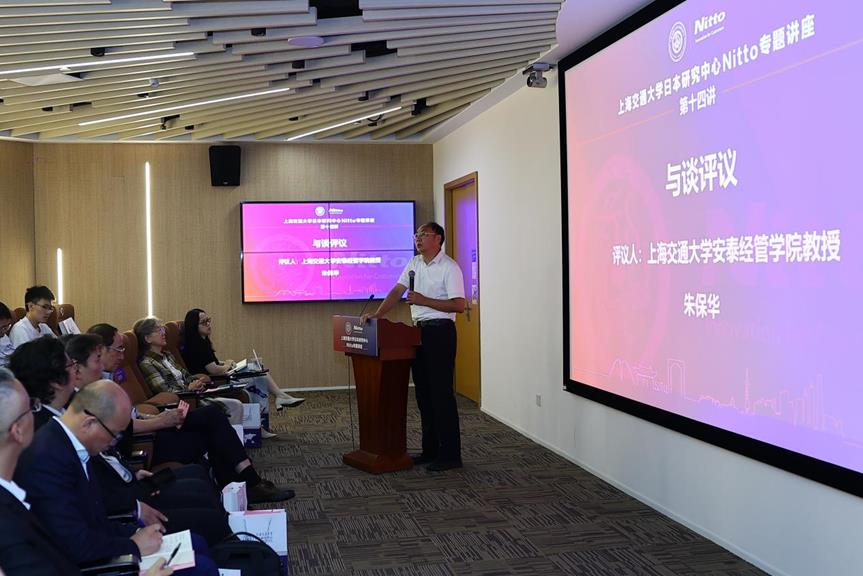
In the discussion and discussion session, Professor Zhu Baohua made a detailed analysis based on his close observation of the Japanese economy in recent years. He believes that Japan's economic stagnation is primarily evidenced by the following factors: first, the scientific and technological reform is not thorough, the development of emerging industries has missed opportunities, and no specific products that can drive demand have been found in the past 30years; Second, the reform of the labor system has not solved the problem of labor distribution, resulting in the stagnation of national wage income growth and the widening gap between the rich and the poor; Third, the population policy is difficult to work, and the problems of low birthrate and aging are prominent.
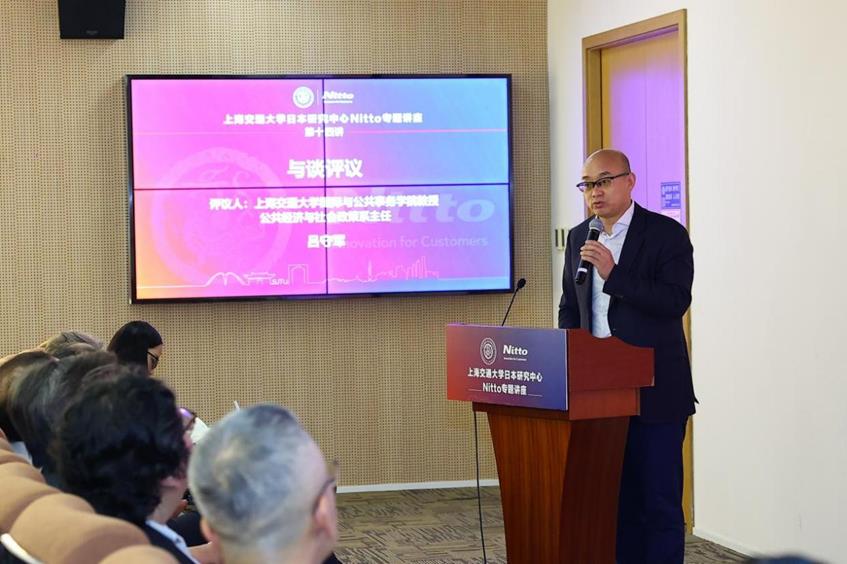
Another commentator, Professor Lu Shoujun, pointed out that the impact of population issues on economic development is mainly manifested in the following aspects: first, the high cost of childcare, resulting in a decline in fertility and further contraction in consumption; Second, the supply of labor is less than the demand, the industry is undergoing structural adjustment, workers are replaced by machines, and it is difficult to find employment, which further leads to consumption contraction; Third, after the implementation of socialization reform in China, the three main consumption of education, housing and pension led to a high debt ratio of residents, which restricted consumption in other aspects. Therefore, he proposed that the possible path in the future should be to shift to a social welfare state, so as to promote population growth and solve the problem of consumption.
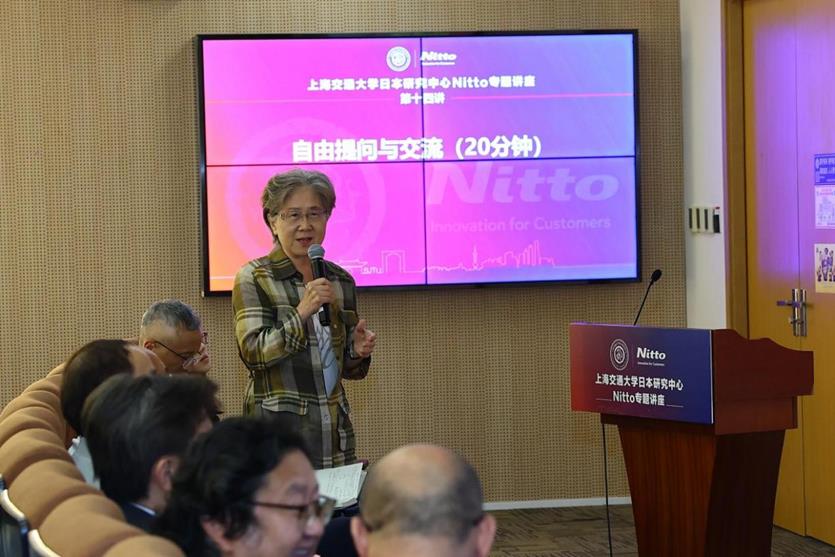
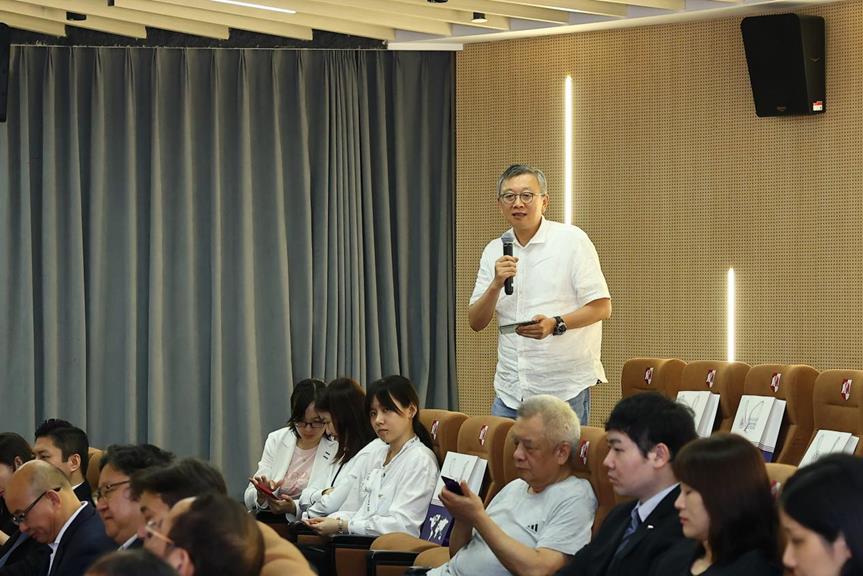
During the Q&A session, the keynote speakers and commentators had extensive discussions on Japan's increasing inflation rate, industrial development, and enterprise innovation, the obstacles faced while adjusting financial policies, and implementing a social and economic evaluation system. The speakers also responded to issues raised by the on-site audience, such as the impact of the Plaza Accord on Japan and how to increase the potential growth rate in the process of supply-side reform.

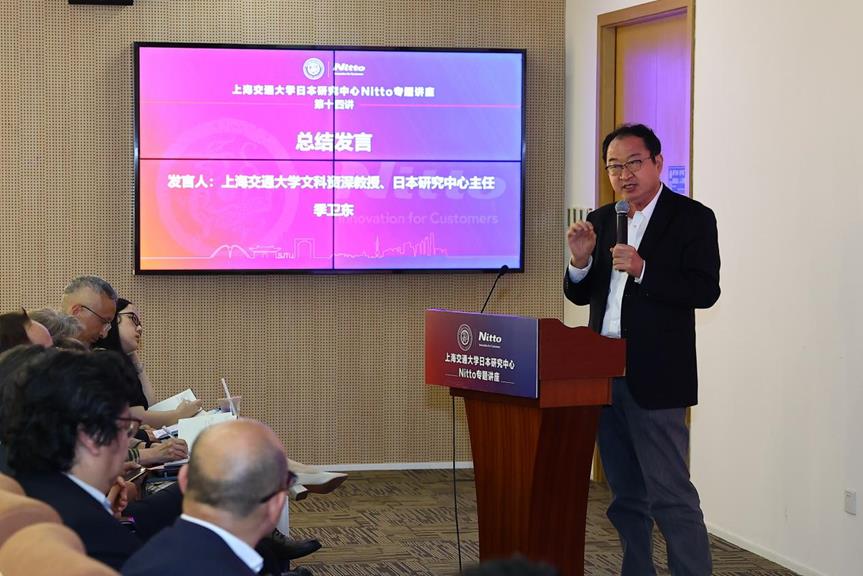
After the Q&A session, Director Ji Weidong made a concluding remark, saying that today's lecture mainly has three impressive points from the content point of view: first, the two keynote speakers are good at using various economic variables to analyze the internal logical operation mechanism and causal relationship of the Japanese economy, especially for the analysis of economic policies involving the Kishida administration, which can help us look at its role more cautiously; Second, the two keynote speakers conducted an in-depth analysis of the complex relationship between consumption structure and domestic demand in Japan's emerging economy that has solved the problems of declining birthrate and aging population by introducing foreign population. Third, the two panelists' analysis of the differences between Japanese corporate capitalism and American shareholder individual capitalism, as well as Japan's detours in economic structural reform, can provide us with valuable lessons. He also said that the keynote speakers focus on economic methods and perspectives, the use of data, and fact-based empirical analysis have brought very important insights into our Japanese studies. Finally, on behalf of the Center for Japanese Studies of Shanghai Jiao Tong University, Director Ji Weidong once again expressed his heartfelt thanks to the two keynote speakers for their wonderful speeches, the two commentators for their discussion and commentary, and the participation of the audience.
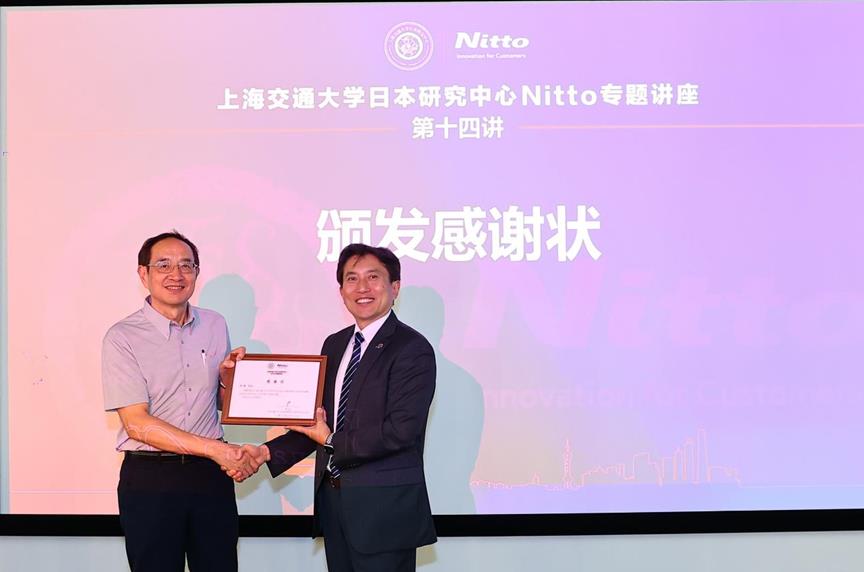
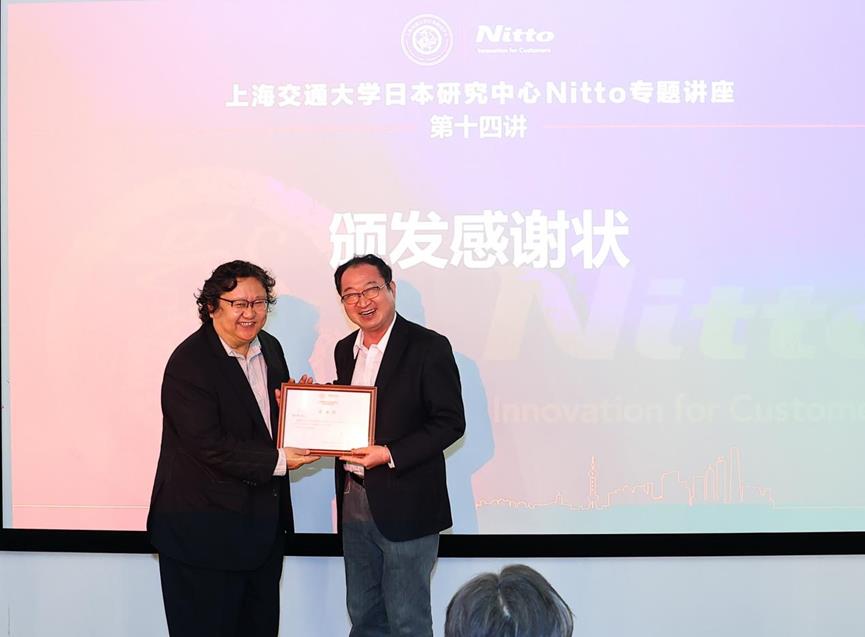
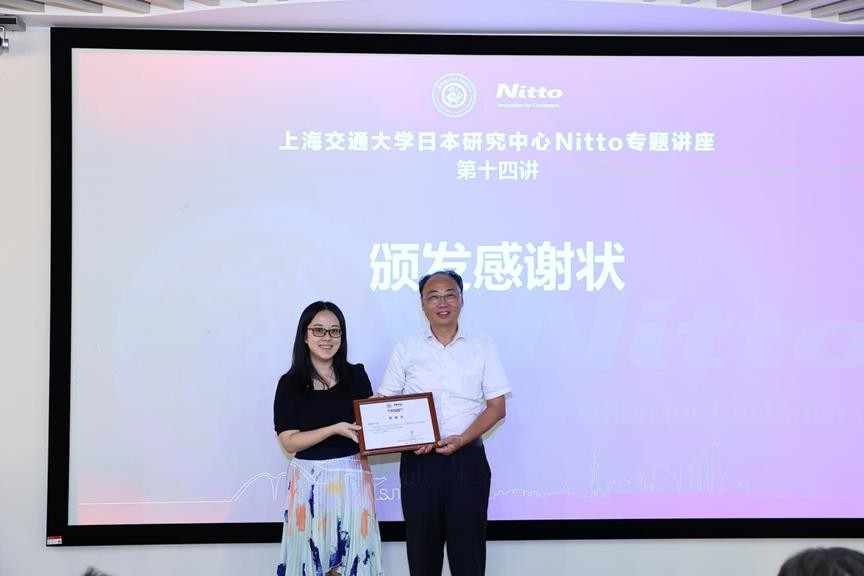
Finally, Chairman Katsuyoshi Jo, Director Ji Weidong, Assistant research professors YinYue, Zhu Qiaochu and other representatives of the organizers and sponsors presented certificates of appreciation to the keynote speakers and panelists, thanking them for their wonderful speeches and strong support to the Center for Japanese Studies of Shanghai Jiao Tong University.